|
Perineal Massage What Is Perineal Massage? Perineal Massage refers to the practice of massage of the area known as the perineum, the approximately 1" or 1 1/2 inch of tissue separating the anus and the vagina of a pregnant person, as well as the outer skin and deep tissues surrounding the opening to the vagina. Other names for the practice include Antenatal perineal massage (APM) and Birth Canal Widening (BCW). These all refer to the same process of preparing the perineum for birth.. How Does Perineal Massage Work? The practice helps to gently stretch the opening to the vagina over time, so that the baby's head can more easily be accommodated at birth. The idea is to stretch the vaginal opening to 10 centimeters prior to birth. Perennial Massage is a harmless practice that can aid to condition, soften, and stretch the vaginal tissues in the weeks and months preceding birth, making the perineal area more flexible and better able to withstand the incredible amount of stretching necessary to accommodate the baby's head. Once the the external skin and vaginal opening is stretched before birth to 10 cm. diameter, there is no longer any reason to perform an episiotomy. The maximal opening in the bony pelvis (pelvic outlet) is 10 cm. An episiotomy will not increase the diameter of the opening of the birth canal beyond 10 cm. Therefore a woman can go into labor knowing she can avoid an epiostotomy. When should I start Doing Perenail massage? Ideally, you should start doing the perineal massage between weeks 34 and 36 of pregnancy. You can do this twice, weekly. Doing this exercise too much seems to weaken its positive benefits, according to research. And before ~34th week, the perineumis not fully ready and likely too sensitive to be stretched so far. There is a significant relaxin surge at week 34, accounting for this. Who Usually Does the Perineal Massage? Pregnant women usually perform self-massage of the perineum. Many health care resources and authorities suggest that the partners of prenatal women help by massaging their pregnant spouse's perineum, saving the pregnant woman from having to perform this task herself. Some health care providers will even perform perineal massage before, or even during, childbirth. What Are The Benefits of Perinal Massage? The benefits of perinal massage are numerous: The best-known benefit is the reduction of the chance of perineal tearing at birth, especially the more severe third and fourth-degree tears. Avoiding any serious tears during birthing helps women avoid infection like cellulitis and necrotizing fasciitis of the pelvic floor muscles. Another important benefit is to greatly reduce the chances of needing an episiotomy during a delivery performed instruments like forceps and vacuum extraction. Preventing excessive blood loss by reducing the risk of serious vaginal tears also reduces the risk of developing Sheehan's syndrome. Post-partum hemorrhage is one of the five leading causes of deaths of mothers in childbirth, and so avoiding significant blood loss is always a better choice. Without a tear, there's no need for stitches, and so that aspect of the experience can also be avoided. Even More Benefits of Perineal Massage! An ancillary benefit to the community is the elimination of routine antibiotic administration after birth; without serious tears this is unnecessary. This helps keep antibiotics from being prescribed so frequently, which helps these important drugs to remain effective, long-term. This also prevents the baby's head from being challenged by excessive pressure and strain during the last thirty minutes of labor. Avoiding epistotomies is a key benefit, as an episiotomy usually *permanently* damages the pelvic floor muscles. This is so because during an episiotomy, the doctor will cut through both nerve and the arterial blood supply to these key Pelvic Core muscles. Sadly, this frequently results in partial atrophy of the pelvic floor muscles as the damaged areas are replaced by thick nonfunctional scar tissue, which, of course, increasing the mother's chance of developing a prolapse, or other Pelvic Floor issues, in the future. During crowning, a woman who has performed Perineal Massage will have a greater chance of avoiding a strong stinging sensation, making the experience less difficult for the mother, at least along one set of parameters. Lastly, either doing self-massage, or having your perineum massage by someone else, can help you to become familiar with the unique stretching sensations of birth. This may allow you to better relax the PF muscles at birth. A mother is also more in control of her own experience during labor knowing how this will feel, and having familiarity with he pelvic floor. Stretching the perineum, along with other activities like certain pelvic Floor strengthening exercises, can increase the flexibility of your perineal muscles.
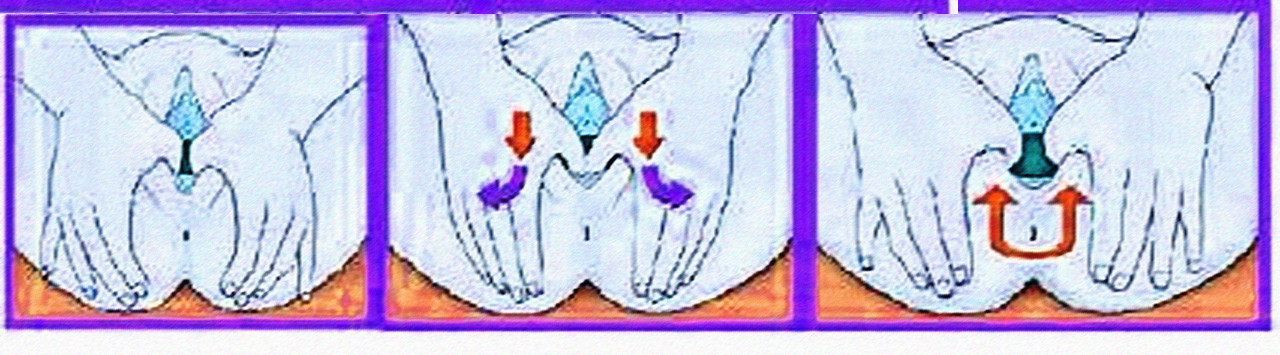
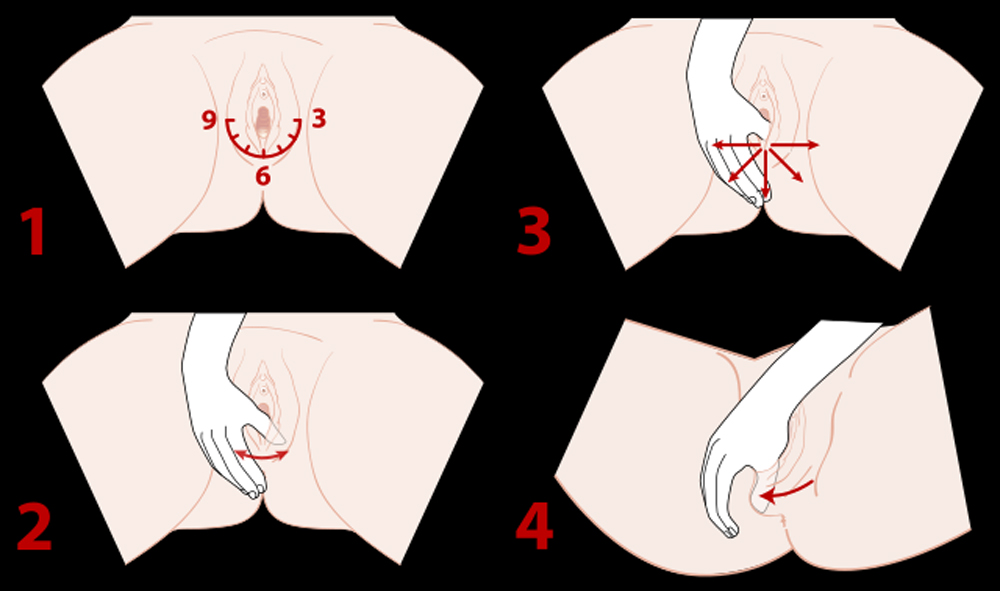
How Do You Do Perineal Massage? Perineal massage is a simple, non-invasive technique that involves gently massaging the outside of the vaginal canal. First, wash your fingers, carefully. Use a massage oil or gel that's safe for the vagina. The Oxford Radcliffe NHS Trust Document "Antenatal Perineal Massage" 2011 is the model for how this exercise is performed. The pregnant mother's places her thumbs about three to five centimeters (around the second knuckle) or so inside the birth canal, while standing with one foot supported by the toilet. (The bathroom floor may be slippery; be careful!) The pregnant woman next pulls backwards towards her spine with her fingers, while relaxing the pelvic floor, progressively increasing pressure under her finger tips until this begins feeling uncomfortable. Do not overdo it! You need to proceed slowly and do a little each time. Next, use both thumbs to pull backwards and then sideways, with thumbs now apart from each other. The goal remains to enlarge the 2 cm diameter opening of the birth canal progressively over the latter-stage of the pregnancy to 10 cm by to use the four fingers of both hands pulling away from each other. This 10 cm should be painless by the time birth comes around, and will help to avoid tearing. Repeat daily, gradually inserting more fingers until you're able to insert all 4 fingers of both hands. It is not possible to stretch this opening further than 10 cm, because we're limited by the size of the cavity of bony walls of the pelvis. How Does You Partner Perform Perineal Massage? If the mother prefers, a trusted partner can perform the massage, avoiding the need for the mother to be standing up and exerting herself. The pregnant woman can sit on a floor, or in bed, with knees bent and slightly apart. After applying oil or lubricant, the partner can perform the massage by inserting initially two fingers, pressing down towards the perineum (in the direction of the anus) as far as the pressure is comfortable for the mother. Once this point of maximum pressure is found, hold the position for 30 seconds. Stretch until a very slight burning, stinging, or tingling sensation is felt. Do not overdo this! Repeat daily, gradually inserting more fingers until able to insert the 4 fingers of both hands.
Midwives Have Always Known About Perineal massage During Pregnancy Midwives have known since time immemorial that massaging the perineum before birth can help a woman to avoid tearing of, and trauma to, the perineum during childbirth. Does the Perineum Vary in Size? The ano-genital distance varies form woman to woman, but regardless, the tissues between the two is still called the perineum. No Special Equipment Is Neeeded For Perennial Massage, Nevertheless There Are Many Useful Tools And, there's no special equipment that's needed. Women don't even need to rely on a health care professional. You can do it yourself, in the comfort of your home, without any accessories, though there ate many products out there that women find helpful, like the Pelvic Floor Wand. And, there are even graduated cylinders,, also known as dilators, that are tools that can be used intra-vaginally as well. There are no shortage of options, as far as how to massage the perineum. German Obstetrician Wilhelm Horkel Borrows From Indigenous People German obstetrician Wilhelm Horkel invented a device in the 1980s called the EPI-NO, an inflatable silicone medical device he conceived of after he took a trip to Africa and met with tribes-people and learned about natural ways women prepare for birth using gradually larger and larger gourds, inserted intra-vaginally prior to birth. "I had for a long time been concerned about Episiotomy performed routinely on first time mothers. I had become aware of the pain and discomfort this caused women, and had avoided this procedure in my Clinic at Starnberg unless the delivery made it unavoidable. Starnberg Clinic enjoyed a reputation for Natural Childbirth practice and followed closely the philosophy of Dr Le Boyer, a pioneer in this field." -Wilhelm Horkel How Frequently Do Women Experience Vaginal Tearing At Childbirth? Between 53% and 79% of women giving birth vaginally end up with some degree of perineal tearing. Of course, experience dealing with this population shows many health care practitioners that the higher number is probably closer to reality. It's a nearly-ubiquitous problem in postpartum women these days in our culture. And, it's numbers like these that inspire us to do all we can to inform as many woman as we can about what they can do to change the statistics, in favor of better outcomes! What Are The Degrees of Vaginal Tearing? Vaginal tearing is graded into a four tier system, for organizational purposes. First Degree Perineal Tears are shallow tears are relatively minor injuries to the outer vaginal tissues, or external skin, that heal without intervention. No stitches are necessary. Most women experiencing tearing More severe tears are classified as Second Degree Perineal Tears. These are far deeper tears that cut through more layers of tissue, slicing so deep into the muscles of the perineum and skin that stitches are usually needed. Third-degree Perineal tears are as above, but are so long that they extend all the way to the anus or rectum. A woman experiencing third-degree perennial tears will require stitches. A Fourth-degree Perineal tear is a "full-thickness" tear reaching from the vaginal opening to the anal opening. Surgery is often required to fix this; mere stitches are not a remedy in this instance. What can Be the Results of Vaginal Tearing? Vaginal tearing, especially severe tears (third and fourth degree), can result in complications such as pain during intercourse, bleeding, infection, fecal incontinence, urinary incontinence, continued pain and soreness, difficulty having bowel movements, with the most severe complications stemming from damage to the anal sphincter muscles. Milder tears (first and second degree)are not nearly as difficult to deal with, experientially, and are mostly limited to causing discomfort during urination and some localized pain. This usually clears up in a short amount of time, either weeks or months. However, there may be lingering side-effects, as well as the infrequent occurrence of more severe side effects, like painful sex, for some women. Does Perennial Massage Work To Prevent Vaginal Tearing? POrineal massage can actually help prevent vaginal tearing during childbirth, believe it or not. And, if you don't believe it, because it seems too good to be true or like unscientific woo, I can understand your skepticism. However, you should kKnow that perineal massage before birth has actually been studied extensively for quite some time, and the positive effects are undeniable. While you may argue about the which figures are most accurate, it's clear that the science shows that Perineal massage is helpful to a the majority of women. Do Studies Support Perineal massage as Efficacious? There are tons of health studies out there performed by researchers from all over the world concluding that there are, in fact, the positive effects of perineal massage, with regard to being able to prevent vaginal tearing. Does Perineal Massage Help With All Pregnancies? Perineal massage doesn't guarantee you won't tear or need other procedures, but it can help you understand your body and prepare for childbirth. You should talk to your health care provider to see if perineal massage is right for you. However, the benefits seem most pronounced in first-time pregnancies. Self-reporting issues, like shame associated with noncompliance with authority, can lead people to falsely state that they complied with a self-massage treatment, and so self-administered perineal massage may be more effective than stated. Doing Perineal massage does not guarantee that you will not tear. However, if you reach 10 cm, and work at it, you will have greater results than doing Perineal Massage and not getting as far as 10 cm with your efforts. Realize that every woman is different, and every pregnancy is different. Therefore, it's understandable that in certain circumstances, Perineal Massage will not work, and it's not effective for everyone. can help with some pregnancies, but it doesn't work for all women or guarantee that you won't tear: Are There Any Women Who Will Especially Benefit From Perineal Massage? First-time mothers seem to benefit most, according to statistics. Women 30 and older also will find Perineal massage of benefit. Women who have had episiotomies in the past can help avoid another such medical procedure. Perineal massage can be helpful for women planning a first vaginal birth after a Cesarean, otherwise known as a VBAC. Women who have had multiple vaginal births will also benefit. Any woman who is pregnant will benefit. Are There Any Contraindications to Performing Perineum Massage? You should check with your medical provider before starting pelvic floor exercises or perineal massage.
Here are some issues that are contraindications to performing Perineal Massage: Do Pelvic Floor Exercises Help to Prevent Vaginal Tearing? Pelvic Floor exercises can also help reduce the risk of vaginal tearing during childbirth. We do offer Pelvic Floor Therapy that is great prenatally, postnatally, or during any phase of a woman's life. Pelvic floor muscle training (PFMT) can help reduce the risk of third- or fourth-degree perineal tears, as well as urinary incontinence. Our Pelvic Floor Therapy teaches this skill. Pelvic floor exercises combined with perineal massage is probably the best option, dealing with the Pelvic Floor from two different directories to help prevent episiotomies and severe perineal trauma, and all that's associated with them. Please Tap Here to Learn More About Pelvic Floor Therapy Are There Any Things You Can Do Besides PFT and Perineal Massage To Help to Prevent Vaginal Tearing? Stay hydrated! Muscles are made of water and your body with thank you. Also be sure to take your Prenatal Vitamins, as Vitamins A, C, and E, are especially helpful. Be sure to get enough proteins to form collegen, and enough EFAs (Essential fatty Acids) to improve the quality of your tissues, maintaining skin elasticity and flexibility. Birthing techniques that may help include using warm compresses, having a water birth, using controlled pushing techniques you've learned, and working toward finding optimal delivery positions. A doula can provide guidance, comfort, and advocacy during childbirth, and may help you along your journey to keep you focused on what you know. Are There Any Other Online Resources That May Be Helpfiul?
American Pregnnacy Association
Wikipedia
Starnberg Medical HK What health studies support Perinial Massage for Pregnant Women? " According to our research, prenatal perineal massage can reduce the risk of perineal tear, especially the risk of 3rd -4th degree perineal tear." Comput Math Methods Med
. 2022 Jul 14;2022:3315638. doi: 10.1155/2022/3315638 -------------------------------------------------------------------------------------------------
"Women who massage their perineum during the last few weeks of pregnancy have fewer episiotomies than other women" ------------------------------------------------------------------------------------------------- "Antenatal perineal massage is associated with a lower risk of severe perineal trauma and postpartum complications."
International Urogynecology Journal
Review Article Published: 12 May 2020 -------------------------------------------------------------------------------------------------
"Reducing perineal injuries in primiparous women can be achieved by providing perineal massage both antenatally and during the second stage of labor. Pelvic floor function is improved in the postnatal phase by perineal massage during the antenatal stage."
Yin, J., Chen, Y., Huang, M. et al. Effects of perineal massage at different stages on perineal and postpartum pelvic floor function in primiparous women: a systematic review and meta-analysis. BMC Pregnancy Childbirth 24, 405 (2024).
"Effect of perineal massage on the rate of episiotomy and perineal tearing,"
Application of perineal massage during active labor decreased the frequency of episiotomy procedures. ClinicalTrials.gov: NCT02201615
"Most vaginal births are associated with trauma to the perineum. The morbidity associated with perineal trauma can be significant, especially when it leads to third- and fourth-degree perineal tears. We hypothesized that antenatal perineal massage could decrease the incidence of perineal trauma, particularly severe perineal tears and other postpartum complications."
Abdelhakim, Ahmed Mohamed, Eldesouky, Elsayed, Elmagd, et al. Antenatal perineal massage benefits in reducing perineal trauma and postpartum morbidities: a systematic review and meta-analysis of randomized controlled trials
" Antenatal perineal massage appears to have some benefit in reducing second or third degree tears or episiotomies and instrumental deliveries. This effect was stronger in the age group 30 years and above."
M. K. Shipman, D. R. Boniface, M. E. Tefft, F. McCloghry Antenatal perineal massage and subsequent perineal outcomes: a randomised controlled trial. BJOG
"Perineal massage is an effective approach to increasing the chance of delivery with an intact perineum for women with a first vaginal delivery but not for women with a previous vaginal birth."
Michel Labrecque, Erica Eason, Sylvie Marcoux, et al Randomized controlled trial of prevention of perineal trauma by perineal massage during pregnancy, Am J Obstet Gynecol 1999;180:593-600 Please Tap Here to Return to Pregnancy and Postnatal Learning Center Main Index Page Please Tap Here For More Details About Prenatal Massage At Home Please Tap Here For More Details About Postpartum Massage At Home
Please click on the '@ Contact Us' button, bottom-left, to access our inquiry form, or use the button at the top of this page. Feel free to also call us voice at (877) 480-8038 for more information or to book an appointment. We'd be happy to speak with you. Cash, Credit Cards, Venmo, PayPal, CashApp, GooglePay, and Gift Certificates accepted. Your insurance may cover Onsite Therapeutic Massage and other mobile Health Services we offer. Please call us for details.
|
|
© Copyright 2002 - 2026 NJMassages.com, D. Alban, H. Miller, All Rights Reserved.
All text and images filed with the Library of Congress
Mountainside Massage Therapy, Mountainside At-Home Massage Therapy, and all other cited trademarks are property of D. Alban, H. Miller

Perineal Massage|Pregnancy Education|Postnatal Education|Perinatal Learning Center

Please scan above QR Code with your phone if you're on a desktop and want to view the Mountainside On-Site Massage Therapy site on your phone.