
|
Induced Lactation and Breastfeeding without Pregnancy Is Breastfeeding Without Pregnancy Possible? Yes, breastfeeding without pregnancy is possible and is called Induced Lactation. Induced lactation can be triggered in a number of ways, with a varying degree of success, depending upon the individual, and their course of treatment. Is Induced Milk the same as Milk That Comes From Having Been Pregnant? Tests show that breast milk produced from Induced Lactation is identical to the breast milk that comes in after pregnancy. Who Might Benefit From Induced Lactation? Non-gestational parents of infants and young babies can use these methods of Lactation Without Pregnancy to be able to provide at least some breast milk to their children. Adoptive families can also benefit for the same reason. And, in families that are same-sex couples, both women can choose to breastfeed, not just the birth mother. If adoptive parents, a same-sex couple can share the task of breastfeeding with both women inducing lactation. Some women may want to begin lactating to contribute milk to a milk bank in their local community to help serve local families in need of milk. Though not so common today, some nannies have the added responsibility of being a newborn's wet nurse, helping to provide milk of her own to the baby to either supplement, or completely replace, the milk of the baby's birth mother. Are There Many Effective Ways A Person Can Induce Lactation Without Being Pregnant? Actually, there are a number of proven methods that seem to work to induce lactation with a pregnancy. Some methods of inducing lactation involve off-label use of standard pharmaceutical drugs, regularly scheduled breast pumping, hand expression, and breast massage. But in every successful program, there's usually a dual-pronged approach: a drug or herbal galactogoue is used, as well as some sort of periodic physical stimulation of the breasts and nipples. Stimulation of the Nipple To Induce Lactation without Pregnancy Among LMTs who practice massage of the breast, it's well-known that anywhere from half to three-quarters of women will experience some discharge from the nipple during Breast Massage, outside of the prenatal and postnatal phases, most commonly before menstruating, a time when many also suffer from PMS and PMDD. And, many women observe that they end up with nipple discharge if wearing a bra that's too tight and creates friction against the nipples. And, that's any time. So, breast, and specifically nipple stimulation, is the best way to induce lactation, at any time, whether in the perinatal phase or not. As you can see form these two examples, the stimulation to the breast and nipple can be from anything. However, as a Certified Lactation professional, I must also add that there are two motions that matter: The squeezing of the nipple and the pulling of the nipple. Breast Massage To Induce Lactation without Having Been Pregnant Breast Massage can help to induce lactation outside of pregnancy. You need to stimulate your breasts quite frequently, so you may want to learn how to do Breast Massage besides the sessions. Having regularly scheduled sessions with a Massage Therapist that does Breast Massage can help to be sure you're on track. YOur Therapist can also help to demonstrate proper techniques of breast massage that will be most effective. And, of course, they're a trained professional, and will perform a session of Breast Massage that will be quite thorough. Suckling A Baby To Induce Lactation with Having Been Pregnant Some families adopt a newborn and wish to feed the baby human milk. While there are many milk banks run by stellar nonprofit organizations dedicated to providing safe and clean milk to families, some parents want to have the experience of breastfeeding. And so, a new mother who has become such via adoption of an infant can, in fact, benefit tremendously, from having the baby suckle. However, there are considerations. You don't want to tire the newborn baby out with fruitless sucking. And, you can also make the baby frustrated, and then they may give up more easily in the future. And so, this has it's major drawbacks. If your sister has a slightly older baby, and you are comfortable, you may get your breasts in action by nursing her infant or toddler. Please know that you must have full permission, and she should clearly understand what you're intending. It could be argued that with a good latch, suckling a baby is the best way to get milk flowing, bar none. Wet Nurses Have A Long History "Wet nursing," a practice where a woman breast-feeds a baby other than her own, is common throughout the world and has historical roots in every culture. Sometimes the Wet Nurse is a family member or close friend, other times it is a woman paid for this service as part of infant care. Cross-nursing, as it is referred to in the medical literature, is safe, as long as all parties are disease-free. Wet Nursing definitely will bring your family closer, and you'll have a far closer tie to nieces and nephews, probably lasting throughout life. You're more like a second Mom, than ever! You can try Wet Nursing on an older baby because the older baby is not in critical need of every single bit of nutrition, around the clock. Unlike a newborn, they will not tire easily, and may even be fully capable of vocalizing when they are getting tired or bored, in no uncertain terms, mind you. Your milk may come in as you daily practice your Cross-Nursing with someone else's child. Let's say you're adopting an infant that's due in May. Let's further say your sister has a 20-month-old and you begin Cross-Nursing in March. Giving yourself two months to get your milk flowing in preparation is ample time. Having Your Partner Suckle To Induce Lactation Is Not Deviant Activity This is a strange topic. Why? because there are people out there involved in an "adult nursing relationship," or ANR. This is a deviant activity, medically defined as both milk fetishism and lactophilia. Now that we've cleared that up, and we have stated that this is not what we are referring to here, let's move along. Can My Partner Suckle My Breast To Induce Lactation without Pregnancy? Yes; your partner can engage in suckling your nipples to induce lactation. And, if it feels good for both of you and brings you closer, so what? Many couples already engage in activities like this; a March 2005 study cited in the Sunday Times indicated that nearly a third of men had suckled their wives' breasts. And, who knows how common it is among lesbian couples. So remember, it's not a mental disorder to do this. It's only a mental disorder for people obsessed with it as a "way of life." https://en.wikipedia.org/wiki/Erotic_lactation Really, though, it's asking a lot to have your partner on-hand to do this throughout the day. And so, this is a good complement to a different Induced Lactation method that's physical, but probably isn't the best on its own. The next three options are likely to comprise the core of your Induced Lactation physical stimulation program.
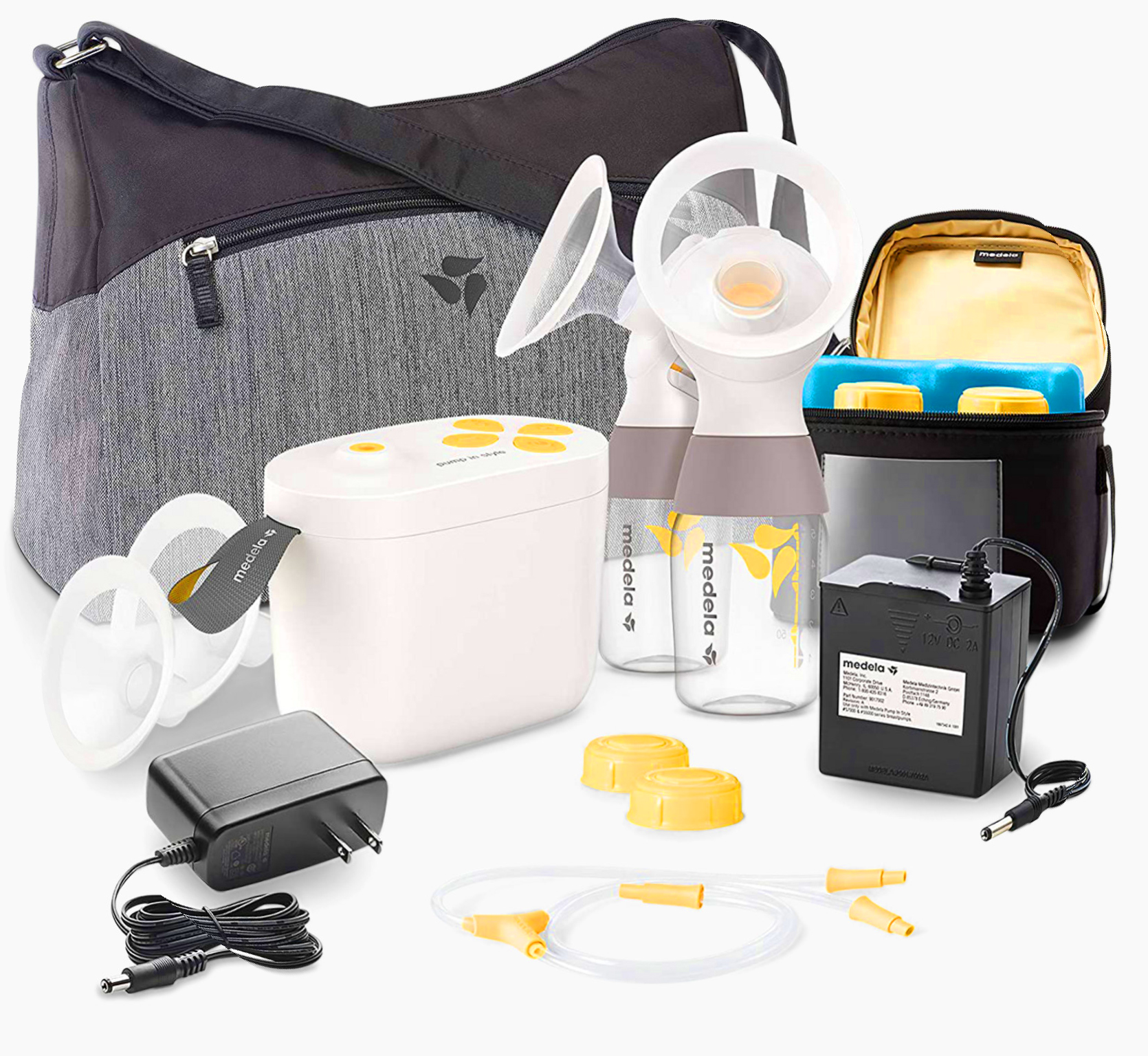
Pumping With An Electric Pump without Having Been Pregnant An electric pump works effortlessly, and both breasts can be pumped at once. Electric Breast Pumps work well, but there are drawbacks. They cost money to operate, and electric Breast Pumps are power source-dependent. The pumps can be noisy or silent. If noise bothers you, try to find one with a lower rating. There's also potential for incorrect use causing injury, as the suction is so strong. Over-pumping can lead to excessive engorgement, or even reduced milk supply. There are also lots of complex parts to clean.
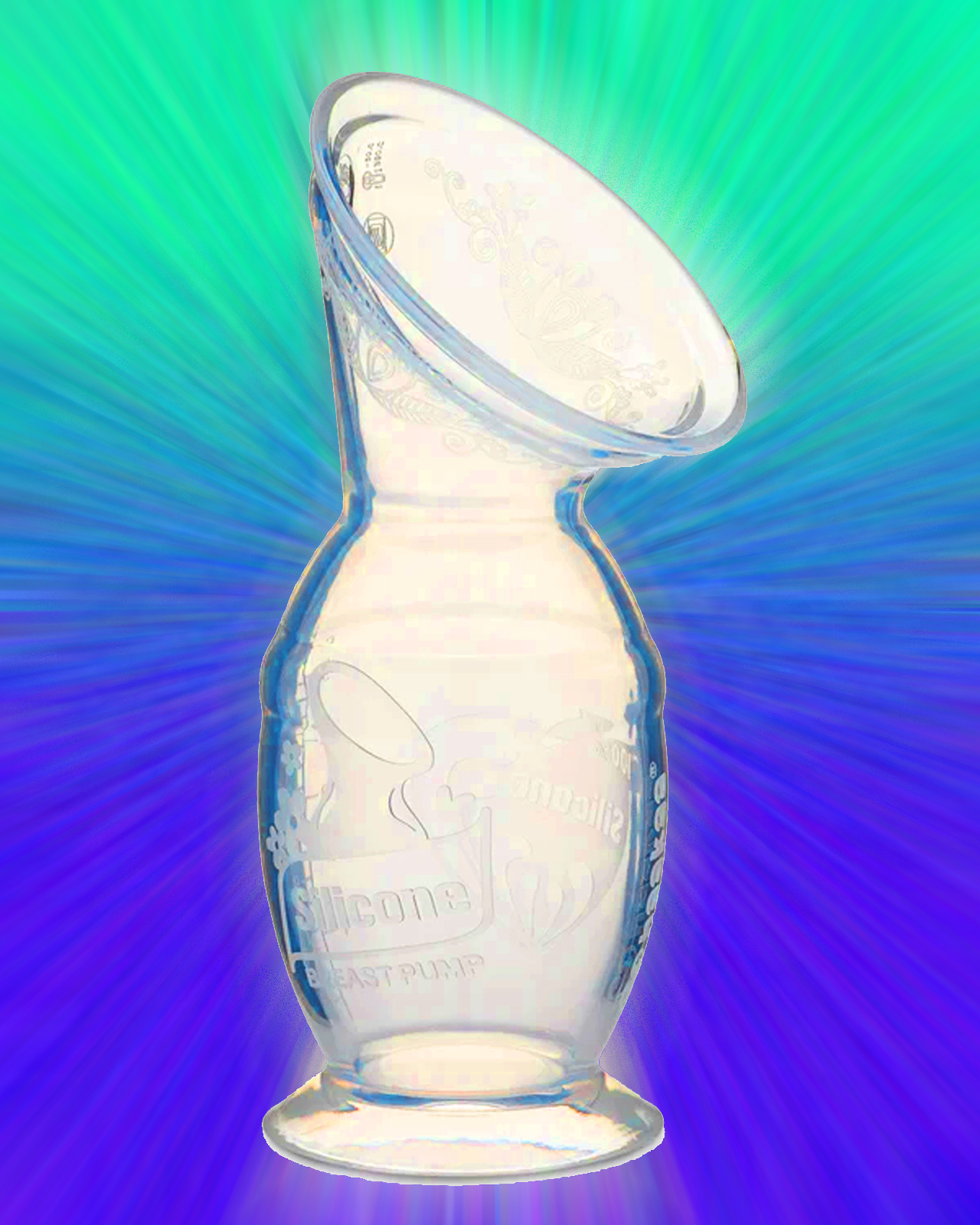
Pumping With A Manual Pumping Without Having Been Pregnant Manual pumps are wonderful, and can be used anywhere, and are silent as a mouse. They must be operated by hand, and while that seems great, after some time, your hand may tire, and yet you have to SOMEHOW continue. Squeezing the plastic pieces may hurt after some time. The soft silicone Haaka (pictured above) is easiest on the hands, but you still must squeeze in a repetitive manner. The advantage is, manual Breast Pumps are portable, easy-to-use, work well, collect the milk incredibly, and are easy to clean. Only one breast can really be pumped manually at a time by most, but it probably is possible to manually pump both breasts at once with some practice.
Hand Expression Without Having Been Pregnant We feel this is, by far, the most vital component of a proper and reasonable Induced Lactation program. Why? You don't need any props or equipment, and you can do this anywhere. Done properly, the movements aren't repetitive, but rather a longer sequence you can vary at will. Believe it or not, hand expression allows you to pump the most milk, the fastest. And, yes, Hand Expression is faster than either an electric breast Pump or a manual model. All you need are clean hands, a pot or glass or cup or bowl to catch the milk in, and you're all set to go. Cleanup is a breeze, and there aren't really any disadvantages to speak of. Cleanup is a breeze, and there aren't really any disadvantages to speak of. The one caveat is that proper hand expression is a skill that must be learned. This comes easier for some women than others, like anything else in life. Need I Stick Solely To One Method of Inducing Lactation? You can certainly try them all. The different means of stimulating the breast physically can all be utilized. After practicing each, in the end you may find one or more ways that work best for you, whether it's pumping or hand expression. But we encourage you to be flexible and find what works for you, drawing from all availably resources. Are Different Breast Pumps Quite Different? Different Breast Pumps vary significantly. Really, though, any reputable brand is fine. And, there are different strengths of suction, as well as differently-sized flanges. It's best to meet with a Lactation Professional to find which works best for you, if you're at all unsure. Remember, pumping should not hurt! How Frequently Must I Pump or Otherwise Stimulate My Breasts? At first, pump for five minutes three times a day. Work up to pumping for 10 minutes every four hours, including at least once during the night. Then increase pumping time to 15 to 20 minutes every 2 to 3 hours. Continue the routine until the baby arrives. How Important Is It To Keep On Schedule with Induced Lactation Exercises? For the physical stimulation component of your Induced Lactation program, you must consider one thing: Regularity. That means that you cannot miss a session, whether it's utilizing any of the above means of physically stimulating the breast detailed above. Keeping your appointments with your breasts is essential and will make ALL the difference. If you keep to the timetable cited above, your chances of a successful Induced Lactation are far greater than if you decide to erratically perform the breast stimulation activity, missing sessions and sleeping through the night. What Drugs Can Cause Lactation Without Pregnancy? Three commonly used lactation drugs are domperidone, metoclopramide, and sulpiride; these medications are often referred to as pharmaceutical galactagogues and are widely used to increase breast milk production when needed. The Mechanism of Action for these drugs involves raising prolactin levels in the body by blocking dopamine receptors. Prolactin is a key hormone for milk production, and so this is an almost surefire means of inducing lactation. Some of the considerations associated with prescribing these drugs include serious side effects. While considered effective, all of these medications should always be used under strict medical supervision due to potential side effects and varying efficacy depending on the individual. Domperidone (Motilium): Considered the preferred choice due to its lower likelihood of crossing the blood-brain barrier, potentially reducing side effects. Metoclopramide (Reglan): May have more side effects like restlessness or drowsiness due to its ability to cross the blood-brain barrier. Which Herbs Can Induce Lactation? There are many herbs used to help increase milk production. Traditional cultures tell us that fennel, fenugreek, and a plethora of other herbs may exert a galactagogue effect. Studies as to the efficacy of Induced Lactation solely with herbs have not been conducted and so we do not know, one way or the other, if a certain herb or combination of different herbs, can successfully aid in inducing lactation. Consult an herbalist of ND for more information. Will A Parent Be Able To Make Sufficient Milk To Exclusively Breastfeed With Induced Lactation? It may, or may not be possible, for a parent to make sufficient breast milk to exclusively breastfeed their infant, and depends upon the individual's genetics, environment, life circumstances, and other factors. Some parents are ale to produce a full milk supply and feed their baby without supplementing with donated breast milk from a milk bank, cow-milk-based baby formula, or synthetic infant formula. Are There Any Harmful Chemicals In Breast-milk From Lactation Drugs? Yes, while most lactation drugs do not pose significant harm to a nursing infant, some medications can transfer small amounts of chemicals into breastmilk, which could potentially be harmful depending on the drug and the baby's individual sensitivity; it's crucial to consult a healthcare professional before taking any medication while breastfeeding to assess potential risks. Not all drugs are excreted in clinically significant amounts into human milk. Also Concentration, baby's age, the mother's dose, the drug's properties, all matter as variables. What is Physiological Discharge From The Breast? Physiological Discharge From The Breast refers to a small volume of clear or milky, orange, white, off-white, yellow, brown, or green discharge from the pores of the nipples that is caused by either friction to the nipples against a tight bra, or from breast manipulation, specifically gently squeezing and stretching of the nipples. If you've ever worn a tight bra all day and in the evening found that there was a small amount of wetness in each of the cups, that was probably Physiological Discharge, and not sweat. Physiological Discharge is not indicative of any health condition and is caused by raised oxytocin levels resulting from nipple stimulation. Physiological Discharge is not spontaneous and usually flows from both breasts, and multiple milk ducts may yield fluid. Test reveal that this is cellular debris, fluid from the mammary glands, and sometimes a very small (not visible) amount of blood cells. Physiological Discharge can happen most easily at certain times of the month, like during the pre-menstrual phase, due to sharply rising and falling levels of the hormones estrogen and progesterone. When is Nipple Discharge A Sign Of A Serious Issue? Pathologic nipple discharge differs many ways form Physiological Discharge. Firstly, pathological discharge is unilateral and only comes out of one nipple. A second sign is bloody discharge. This also indicates something is not right. Spontaneous discharge is not the same as discharge that is provoked by nipple stimulation. If fluid leaks from the nipple without touvh or pressure, that is a sign to investigate further. Of course, a visible, or palpable breast lump in the breast having discharge is another reason to talk with your health care provider immediately. Women experiencing pathological nipple discharge should be referred for medical imaging immediately to exclude carcinoma. Will Induced Lactation Work For Trans-Men, Women Who Are Non-Binary, Or People Transitioning From "Woman" To "Man"? Induced Lactation works with the bodies of *biological* females. For females who are transitioning, or whom have transitioned genders, Induced Lactation may or may not be possible. You may have to temporarily go off your hormones. It's a choice you must make. If you've had breast reduction surgery as part of your gender-affirming care, you may not be able to produce milk through Induced Lactation, due to the destruction of the milk ducts and loss of lobules. Males who've taken female hormones and have substantial, developed breast tissue may also produce discharge identical to milk from the various induction methods. This area of research is not well-studied, and so medical professionals cannot advise men to breastfeed or provide breast milk to babies. Can Intersex People Make Breast Milk Via Induced Lactation? Intersex people vary quite a bit, and so it's fair to say that some would be able to produce breast milk through Induced Lactation methods, while others might not, owing to hormone profiles, environmental and genetic reasons, as well as gender assignment surgeries associated with being intersex. Intersex people are humans who have some of each of the secondary sex characteristics, both male and female. Sometimes this is genetic in basis, other times not. There are various different reasons, and ways, people are born inter-sex, and it's expressed differently among intersex individuals' physiology. Many Intersex people have had "corrective surgeries" through their childhood and youth to "fix" them. If this involved removal of breast tissue, then Induced Lactation is not a possibility. Intersex people represent the "i" in "LGBTQAI," because Intersex people are considered "Queer," because the group is not really accepted even today, in many ways, in our extremely gender-polarized society.
Either way, a thorough review of health history and a consultation with a qualified health care provider experienced with this may give you, or your Intersex loved one, more answers.
Please Tap Here to Return to Mom-Edu Main Index Page Please Tap Here For More Details About Prenatal Massage At Home Please Tap Here For More Details About Postpartum Massage At Home
Please click on the '@ Contact Us' button, bottom-left, to access our inquiry form, or use the button at the top of this page. Feel free to also call us voice at (877) 480-8038 for more information or to book an appointment. We'd be happy to speak with you. Cash, Credit Cards, Venmo, PayPal, CashApp, GooglePay, and Gift Certificates accepted. Your insurance may cover Onsite Therapeutic Massage and other mobile Health Services we offer. Please call us for details.
|
|
© Copyright 2002 - 2026 NJMassages.com, D. Alban, H. Miller, All Rights Reserved.
All text and images filed with the Library of Congress
Mountainside Massage Therapy, Mountainside At-Home Massage Therapy, and all other cited trademarks are property of D. Alban, H. Miller

Induced Lactation|Breastfeeding without Pregnancy|Pregnancy Education|Postnatal Education|Perinatal Learning Center

Please scan above QR Code with your phone if you're on a desktop and want to view the Mountainside On-Site Massage Therapy site on your phone.


-WikiPedia.jpg)


